Between Pöhlde and Rhumequelle


- 2:00 h
- 6.96 km
- 136 m
- 137 m
- 157 m
- 242 m
- 85 m
- Start: Parking lot at the Rhumequelle between Pöhlde and Rhumspringe
- Destination: Parking lot at the Rhumequelle between Pöhlde and Rhumspringe
You walk above, the water below. This route runs over several underground channels in the karst, which form the drainage area of the Oder and Sieber rivers to the Rhumequelle.

Good to know
Pavements
Best to visit
Directions
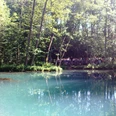
We start at the Rhumequelle. This largest karst spring in northern Germany obtains the main part of its water from the sinkholes of the Harz rivers Oder and Sieber. These sinkholes are located about 50 - 60 m higher than the spring basin of the Rhumequelle. Rows of sinkholes indicate the underground course of the karst water on the earth's surface. At the site, the karstified Zechstein layers are displaced against the Buntsandstein. At this fault, the water rises.
During the day, about 215,000 m³ of water flow out from the depths via the Rhume, which is about 2,500 liters per second. At low water, only 0.9 m³/s flow out. Conversely, the spring can discharge up to 5.5 m³/s during flood times. The water has a constant temperature between 8° and 9° C. Around 40,000 t of gypsum and 17,000 t of lime leave the South Harz dissolved via the spring annually and ultimately end up in the North Sea!
The further circular path leads over the wooded Bornberg (Born = spring) into a side valley with the nature reserve Gr. Butterloch and further partly swampy sinkholes, significant biotopes for animals and plants of the wet habitats. It ascends to the "pass" at the former brickyard Pöhlde, which forms the aboveground watershed between the South Harz and the Eichsfeld.
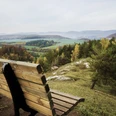
On the other side, it ascends to a roundabout of the nature reserve Floating Island, a deep sinkhole, at the bottom of which on a sinkhole pond a plant community formed that floated due to gas bubbles but has now largely silted up. This small round already reveals beautiful views of the further South Harz. Those interested can make a short detour from here to the medieval fortification "King Heinrich's Vogelherd."
Otherwise, the path continues on the signposted karst hiking trail over the old railway embankment paved as a bike and hiking path back towards the Rhumequelle. At a somewhat tricky point, we leave the embankment, cross the road, and hike along some fish ponds and over a pretty path in the deciduous forest above the state road back to the starting point.
Directions & Parking facilities
Parking lot Rhumequelle on Herzberger Straße
Author
Förderverein Deutsches Gipsmuseum und Karstwanderweg e.V.
Organization
Harz: Magische Gebirgswelt
License (master data)

Nearby